
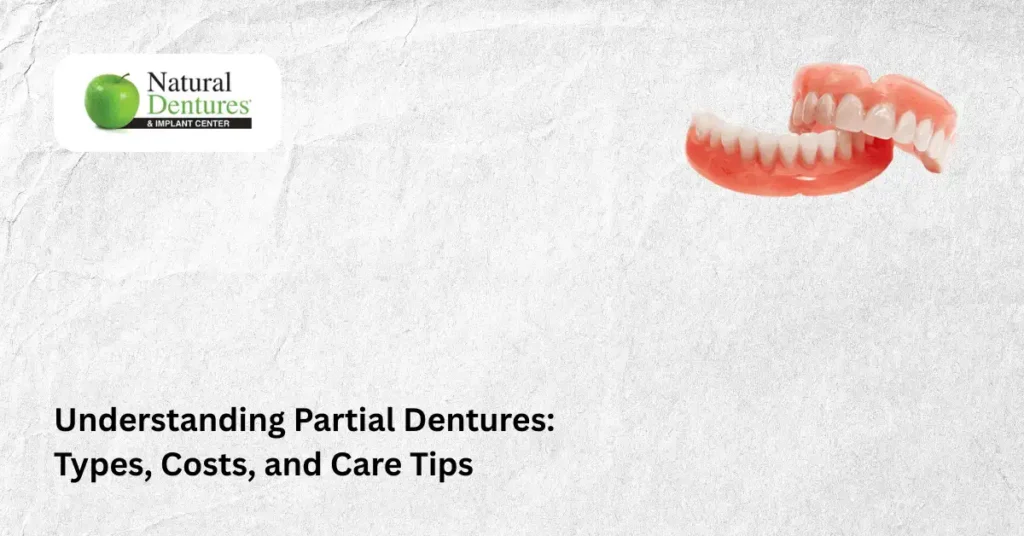
If you’ve lost a few teeth but still have plenty of healthy ones, a partial denture may be the most natural-looking, affordable way to restore your smile—without the commitment of full dentures or the cost of implants. A removable partial denture (often shortened to RPD) is a custom-crafted dental prosthesis that replaces one or more missing teeth while clipping securely around the natural teeth you still have.
Partial dentures are one of the most common solutions for adult tooth loss in the United States. According to the National Institute of Dental and Craniofacial Research (NIDCR), adults aged 65 and older have an average of just 20.7 remaining teeth, and roughly 57% of Americans aged 65 to 74 wear some form of denture—many of them partials. The American College of Prosthodontists notes that as edentulism declines and people keep more of their natural teeth into older age, demand for partial dentures continues to climb faster than any other denture category.
At Natural Dentures & Implant Center, we’ve handcrafted partial dentures for Oregonians for more than 40 years—over 40,000 smiles restored across our Eugene, Salem, Corvallis, and Roseburg locations. This guide will walk you through the main types of partial dentures, what each one costs in Oregon, how the fitting process works, and exactly how to care for your new partial so it lasts as long as possible.
What Is a Partial Denture?
A partial denture is a removable dental appliance that replaces one or more missing teeth and is anchored to the remaining natural teeth. It typically consists of replacement teeth attached to a gum-colored base, often supported by a thin metal framework or a flexible thermoplastic. Unlike a full denture, a partial fills in gaps rather than replacing an entire upper or lower arch.
How a partial denture differs from a full denture: A partial denture replaces every tooth in an arch and rests on the gums alone. A partial denture works alongside your remaining natural teeth, using clasps, precision attachments, or flexible undercuts to stay in place. That distinction matters because keeping your natural teeth helps preserve your jawbone, your bite, and your facial structure.
Common signs you may need a partial denture
- You’re missing one or more teeth, but still have most of your natural teeth
- Chewing has become difficult, or you avoid certain foods
- Nearby teeth are starting to drift into the empty space
- You feel self-conscious smiling, speaking, or being photographed
- A dentist has recommended replacing missing teeth to protect the rest of your bite
What Are the Main Types of Partial Dentures?
There are five main types of partial dentures, and the right choice depends on how many teeth you’re missing, where the gaps are, your budget, and how long you want the prosthesis to last. Here’s how the most common options compare side-by-side:
| Type | Best For | Avg. Lifespan | Typical Cost Range |
| Cast Metal Framework | Long-term wear, multiple missing teeth, and durability | 10–15 years | $1,200–$3,000 |
| Flexible (Nylon, e.g., Valplast) | Aesthetics, metal allergies, comfort-first patients | 5–8 years | $1,000–$2,800 |
| Acrylic (with wire clasps) | Transitional or healing-phase use after extractions | 3–5 years | $650–$1,800 |
| Implant-Supported Partial | Maximum stability, jawbone preservation, no clasps | 15+ years | $3,500–$15,000+ |
| Flipper / Nesbit Partial | Single-tooth replacement, often a temporary front-tooth solution | 1–5 years | $300–$900 |
1. Cast Metal Framework Partial Dentures
What it is: A cast metal partial features a thin, strong framework—usually cobalt-chromium or titanium—with acrylic gums and natural-looking porcelain or composite teeth attached. Metal clasps engage your existing teeth to hold the partial securely in place.
Best for: Patients who want the longest-lasting, most stable removable option. Cast metal partials routinely last 7 to 10 years or longer when properly designed and maintained, and the precision-cast framework distributes chewing forces evenly across the bite.
Things to consider: Metal clasps can sometimes be visible depending on tooth position. Modern designs hide clasps behind the back teeth whenever possible, and precision attachments can be added to achieve a fully metal-free smile line.
2. Flexible Partial Dentures (Nylon Thermoplastic)
What it is: Flexible partials are made from a thin, gum-colored thermoplastic—most commonly nylon-based materials like Valplast or Duraflex. The base flexes gently to snap into place, eliminating the need for visible metal clasps.
Best for: Patients who prioritize aesthetics, have metal or acrylic allergies, or need a partial that’s lightweight and comfortable from day one. Because the gum-colored material blends with your natural tissue, most people can’t tell you’re wearing a partial at all.
Things to consider: Flexible partials work best for short-span gaps—typically one to four missing teeth. Long spans flex too much under chewing forces, which is why they’re not recommended for distal-extension cases. They also typically need to be remade rather than relined when fit changes.
3. Acrylic Partial Dentures
What it is: An acrylic partial uses a rigid pink acrylic base with metal wire clasps that hook around your remaining teeth. It’s the most affordable type of partial denture.
Best for: Healing periods after extractions, transitional use while planning for implants, or as a short-term solution for budget-conscious patients. Acrylic partials are quick to fabricate and easy to adjust at the chair.
Things to consider: Acrylic partials are bulkier than metal or flexible options, more prone to fracture, and typically last only three to five years before needing replacement. Most denturists recommend them as a stepping-stone rather than a long-term solution.
4. Implant-Supported Partial Dentures
What it is: An implant-supported partial uses two or more dental implants as anchors instead of relying on your remaining natural teeth. The partial snaps onto the implants for a rock-solid fit—no clasps, no slipping.
Best for: Patients who want the comfort and stability of implants but don’t need (or can’t afford) full-arch implant restoration. Implant-supported partials also help preserve jawbone in the area where teeth are missing, which traditional removable partials cannot do.
Things to consider: This is the highest-investment option because it requires implant placement and a healing period before the final partial is delivered. We cover this in detail in our guide to implant-supported dentures.
5. Flipper Teeth and Nesbit Partials
What it is: A flipper (also called a flipper tooth) is a lightweight acrylic partial that replaces one or two missing teeth—usually in the front—using a thin acrylic plate. A Nesbit partial is similar but designed for one or two back teeth, often without crossing the palate.
Best for: Single-tooth replacement during implant healing, an immediate cosmetic fix for a missing front tooth, or a low-cost interim option. They’re sometimes called “flipper teeth” because they can be flipped in and out easily.
Things to consider: Flippers and Nesbit partials are designed for short-term wear. They’re not built to handle full chewing forces over many years, and most patients eventually transition to a cast metal partial, a flexible partial, or an implant.
How Much Do Partial Dentures Cost in Oregon?
Partial denture costs in Oregon typically range from $300 to $15,000+, depending on the type, materials, and number of teeth being replaced. Here’s a realistic breakdown of what most Oregon patients can expect to pay:
- Flipper or Nesbit partial: $300–$900
- Acrylic partial denture: $650–$1,800
- Flexible (Valplast-style) partial: $1,000–$2,800
- Cast metal framework partial: $1,200–$3,000
- Implant-supported partial: $3,500–$15,000+ depending on number of implants
What affects the price of a partial denture?
- Materials: Premium porcelain teeth, characterized acrylic, and titanium frameworks cost more than standard composite teeth and cobalt-chrome.
- Number of teeth replaced: More teeth = more material, more lab time.
- Pre-treatment work: Extractions, fillings, or gum treatment may be needed first.
- Custom craftsmanship: Handcrafted partials made in our on-site Oregon laboratories cost slightly more than mass-produced overseas options—but they fit better, last longer, and look more natural.
- Insurance: Most dental plans cover 50% of the cost of partial dentures up to your annual maximum. Oregon Health Plan (OHP) covers partials for many adult members; we verify your benefits before any work begins.
Worried about the cost? Your first visit to Natural Dentures is always free, including a no-pressure exam and a detailed quote. We also offer in-house financing, CareCredit, and a path to a natural smile at every budget level—from premium handcrafted partials down to entry-level economy options.
How Are Partial Dentures Made? The Step-by-Step Process
Getting fitted for a partial denture at Natural Dentures usually takes between two and five appointments over two to six weeks. Because we craft every partial in our on-site Oregon laboratories, we can move faster than clinics that ship work overseas. Here’s what to expect:
Step 1: Free consultation and exam
Your first visit is complimentary. A licensed Oregon denturist examines your mouth, takes X-rays if needed, listens to what you want from your new smile, and walks you through every option with approximate pricing. There’s no pressure to decide on the spot.
Step 2: Impressions and bite registration
We take precise impressions of your upper and lower arches and record how your teeth come together. Modern digital scanning is also available for added accuracy.
Step 3: Wax try-in
A wax model of your partial is created to preview the tooth shape, size, and color before final fabrication. This is when you tell us what to tweak—nothing is locked in yet.
Step 4: In-Oregon fabrication
Once you approve the design, our denture technicians handcraft your final partial in our Oregon lab. Cast metal frameworks are precision-cast, flexible bases are injection-molded, and every tooth is set by hand for a natural appearance.
Step 5: Delivery and adjustment
You come back to try on your finished partial, and we adjust the fit until it feels right. Plan on a short break-in period of one to two weeks while your mouth adapts. We schedule follow-up adjustments at no charge—and we offer free adjustments for the life of your teeth.
How Long Do Partial Dentures Last?
With proper care, partial dentures typically last 5 to 15 years, depending on the type:
- Cast metal partials: 10–15 years (often longer with good maintenance)
- Flexible partials: 5–8 years
- Acrylic partials: 3–5 years
- Implant-supported partials: 15+ years for the implants; the partial itself may need replacement after 10–12 years
Lifespan also depends on changes inside your mouth. As you age, your jawbone slowly resorbs (shrinks) in areas where teeth are missing, which is why even a well-made partial may need a reline—or eventually replacement—every few years. Studies show roughly 20% of denture wearers need their fitting readjusted within three years. That’s why we include free adjustments for the life of your teeth on every partial we make.
How Do I Care for My Partial Dentures?
Caring for a partial denture is simple, but the routine matters. Plaque and tartar build up on partials just like they do on natural teeth, and a poorly cleaned partial can damage the very teeth it’s anchored to.
Daily partial denture care routine
- Rinse after every meal to remove food debris.
- Brush your partial twice a day with a soft denture brush and non-abrasive denture cleanser—never regular toothpaste, which is too abrasive.
- Brush your natural teeth, gums, and tongue morning and night with fluoride toothpaste to prevent decay around the clasps.
- Soak overnight in a denture-cleansing solution or plain cool water. Never let your partial dry out—heat or dryness can warp the base.
- Handle over a folded towel or sink of water when cleaning, so a slip doesn’t fracture the partial.
- See your denturist every 6–12 months for a professional cleaning and a fit check.
What to avoid
- Hot water: Can warp acrylic and flexible bases.
- Bleach or harsh household cleaners: Damage the gum-colored material and can corrode metal clasps.
- Whitening toothpastes and stiff brushes: Scratch the surface and create places for plaque to hide.
- DIY repairs: Super glue contains chemicals you should not put in your mouth, and it almost always ruins the partial. We offer same-day denture repairs at all four locations—it’s faster than you think.
How Do I Find Partial Dentures Near Me in Oregon?
Natural Dentures & Implant Center has four convenient Oregon locations, each with a licensed denturist and on-site lab capability. Whether you’re searching for partial dentures near me in Lane County, the mid-Willamette Valley, Benton County, or the Umpqua Valley, we have you covered:
| Location | Address | Phone |
| Eugene (HQ) | 1241 Oak Street, Eugene, OR 97401 | (541) 686-9897 |
| Salem |
3545 Lancaster Dr NE, Salem, OR 97305 |
(503) 371-9897 |
| Corvallis | 2294 NW Kings Blvd, Corvallis, OR 97330 | (541) 754-0914 |
| Roseburg |
868 NW Garden Valley Blvd, Roseburg, OR 97471 |
(541) 378-6257 |
Or call our toll-free number 866-551-3509, and we’ll connect you with the location nearest you. Visits are always free—including the exam and a personalized treatment plan.
Frequently Asked Questions About Partial Dentures
Are partial dentures noticeable when you smile?
Modern partial dentures are designed to look natural. Flexible (nylon) partials and well-designed cast metal partials hide their attachments behind your natural teeth, so most people will never know you’re wearing one. The replacement teeth are color-matched to your existing teeth for a seamless blend.
Can you sleep with partial dentures in?
We recommend taking your partial out at night to give your gums a chance to rest and to reduce the risk of bacterial buildup. Soak it in cool water or a denture cleanser overnight—never let it dry out, as that can change the fit.
What’s the difference between a flipper tooth and a partial denture?
A flipper is a type of partial denture, but it’s a lightweight, short-term version designed mainly for one or two missing front teeth. Flippers are made of acrylic and are typically used as a temporary fix during implant healing or until a permanent partial or bridge is placed. Traditional partials are stronger, last longer, and can replace several teeth at once.
Will dental insurance cover a partial denture?
Most dental insurance plans cover 50% of the cost of partial dentures, up to your annual maximum benefit. Oregon Health Plan (OHP) covers partial dentures for many adult members. We verify your benefits before any work begins, so you know exactly what your out-of-pocket cost will be.
How long does it take to get used to wearing a partial denture?
Most people adjust to a new partial within one to two weeks. Speech and chewing feel slightly different at first, but practicing with soft foods and reading aloud speeds up the adjustment. We schedule follow-up appointments to fine-tune the fit at no charge.
Can I eat normally with a partial denture?
Yes. After the brief adjustment period, most people eat a full diet with their partial in place. Start with soft foods cut into small pieces, chew on both sides at once to stabilize the partial, and gradually add tougher foods. Sticky candies, hard nuts, and corn on the cob are best avoided.
What happens if my partial denture breaks?
Don’t try to glue it yourself—super glue contains chemicals that aren’t safe for your mouth and almost always ruins the partial. Bring it to any Natural Dentures location, and our on-site lab can often complete same-day repairs.
Are partial dentures or dental implants better?
It depends on your goals, budget, and oral health. Partial dentures are more affordable and don’t require surgery. Implants are a permanent solution that preserves jawbone and feels closest to natural teeth. Many patients start with a partial and transition to implants—or an implant-supported partial—when the timing is right.
Ready to Restore Your Smile? Let’s Talk.
A missing tooth shouldn’t stop you from smiling, eating the foods you love, or feeling confident in a photo. Whether you need a single flipper tooth, a flexible partial, or a precision cast-metal framework, our licensed Oregon denturists will listen to what you want and craft a partial denture that fits your life and your budget. Everyone has a different story—we’ll work together to find what’s right for you.
Fix addresses- not sure if this is coming from the website- not on there either
Yes, we’ll do that prior to posting.