
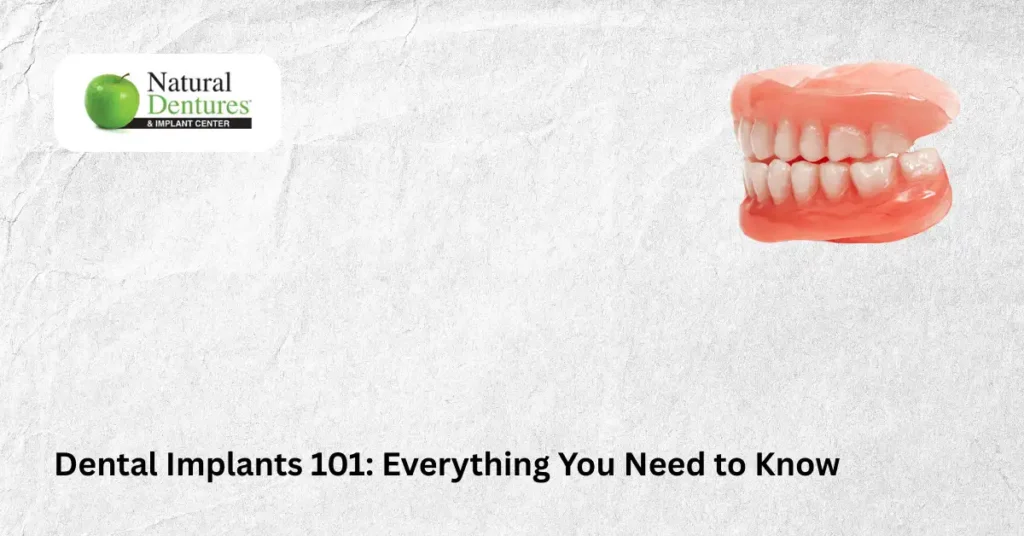
If you’re missing one or more teeth and looking for a permanent solution that looks, feels, and functions like your natural teeth, dental implants may be the right choice for you. Unlike traditional dentures, which sit on top of the gums, dental implants are anchored directly into the jawbone—providing a level of stability and comfort that no other tooth replacement option can match.
At Natural Dentures & Implant Center, we’ve helped thousands of patients across Oregon—in Eugene, Salem, Corvallis, and Roseburg—restore their smiles with dental implants. With over 40 years of experience and on-site laboratories, our team of licensed denturists and in-house dentists provides complete care from consultation through final restoration, all under one roof.
This comprehensive guide covers everything you need to know about dental implants: how they work, what the procedure involves, costs, recovery expectations, and who makes a good candidate. Whether you’re just beginning your research or you’re ready to schedule a consultation, this article will help you make an informed decision about your smile.
What Are Dental Implants and How Do They Work?
A dental implant is a small titanium post that a dentist surgically places into the jawbone to serve as an artificial tooth root. Once the implant fuses with the bone through a natural process called osseointegration, it creates a stable foundation for a custom-made crown, bridge, or denture that looks and functions like a natural tooth.
Every dental implant consists of three main components:
- The implant post (fixture): A biocompatible titanium or zirconia screw that is placed into the jawbone. Approximately 93% of dental implants placed in the United States use titanium because of its superior strength, durability, and ability to bond with living bone tissue.
- The abutment: A small connector piece that attaches to the top of the implant post and sits above the gumline. The abutment serves as the anchor point for your replacement tooth.
- The restoration (crown): The visible part of the tooth—a custom-crafted implant crown designed to match the color, shape, and size of your surrounding natural teeth for a seamless, natural-looking result.
This three-part design is what makes dental implants unique among tooth replacement options. Because the implant integrates with your jawbone, it stimulates the bone just like a natural tooth root, which helps prevent the bone loss that commonly occurs after tooth extraction.
Who Is a Good Candidate for Dental Implants?
Most adults with one or more missing teeth and adequate jawbone density are good candidates for dental implants. However, your overall health, oral hygiene habits, and specific dental situation all play important roles in determining whether implants are right for you.
You may be an ideal candidate for dental implants if you:
- Are missing one or more teeth due to injury, decay, or gum disease
- Have a fully developed jawbone with adequate bone density to support an implant
- Are in good general health and do not have conditions that may impair bone healing
- Do not smoke or are willing to quit before and during the healing process
- Are committed to maintaining good oral hygiene and attending follow-up appointments
- Want a permanent tooth replacement that doesn’t require adhesives or removal for cleaning
What If You Don’t Have Enough Bone?
Insufficient jawbone density doesn’t automatically disqualify you from receiving dental implants. Bone grafting procedures can rebuild the bone in your jaw to create a strong enough foundation for implant placement. Your implant specialist will evaluate your bone structure during your consultation—often using 3D imaging—to determine the best approach for your situation.
What Does the Dental Implant Procedure Look Like Step by Step?
The dental implant procedure typically takes place over several months and involves three main phases: implant placement, healing and osseointegration, and final restoration. While this may sound involved, each phase is carefully planned to ensure the best possible outcome for your smile.
Phase 1: Consultation and Treatment Planning
Your journey begins with a comprehensive consultation, which at Natural Dentures & Implant Center is completely free. During this visit, your implant specialist will examine your mouth, review your dental and medical history, and take diagnostic images (including X-rays or 3D scans) to assess your bone structure. Together, you’ll discuss your goals, review your options, and develop a personalized treatment plan—including an approximate cost estimate.
Phase 2: Implant Placement Surgery
During the surgical phase, the implant post is placed directly into the jawbone through a small incision in the gum tissue. The procedure is performed under local anesthesia, and many patients report that the experience is more comfortable than they expected. For patients who need a full set of teeth replaced, advanced solutions like All-on-4 dental implants allow an entire arch of teeth to be supported by as few as four strategically placed implants.
Phase 3: Osseointegration (Healing Period)
After implant placement, the titanium post gradually fuses with the surrounding jawbone over a period of three to six months. This biological bonding process—called osseointegration—is what gives dental implants their remarkable stability and longevity. During this healing period, you may wear a temporary restoration so you’re never without teeth.
Phase 4: Abutment Placement and Final Restoration
Once osseointegration is complete, your dentist attaches the abutment to the implant post and takes impressions for your permanent restoration. Your custom implant crown dentures are then crafted to match your natural teeth. At Natural Dentures, our on-site Oregon laboratories allow us to handcraft your restoration with precision, ensuring a natural-looking, comfortable fit.
How Much Do Dental Implants Cost?
The cost of a single dental implant in the United States typically ranges from $3,000 to $6,000, depending on your location, the complexity of your case, and the type of restoration needed. Full mouth dental implant solutions such as All-on-4 can range from $15,000 to $30,000 per arch. Because we place so many implants each year, we are able to bring that cost down to $1000 per implant! While dental implants represent a significant investment, their longevity and quality of life benefits often make them the most cost-effective tooth replacement option over time.
Several factors influence the total cost of dental implant treatment:
- Number of implants needed: Replacing a single tooth costs less than a full arch restoration.
- Need for preparatory procedures: Bone grafting, sinus lifts, or tooth extractions add to the overall cost.
- Type of restoration: A single implant crown costs less than an implant-supported bridge or full-arch denture.
- Materials used: Premium materials and custom-crafted restorations may cost more but deliver better long-term results.
- Geographic location: Costs vary by region. Oregon-based providers may offer different pricing than practices in major metropolitan areas.
Insurance and Payment Options
While many dental insurance plans offer partial coverage for implant procedures, coverage varies widely. At Natural Dentures & Implant Center, we offer options for every budget—from premium implant solutions to entry-level economy options—so that everyone has a path to a natural smile again. We’re happy to discuss payment plans and financing during your free first visit.
What Is the Recovery Process After Dental Implant Surgery?
Most patients return to normal daily activities within one to three days after dental implant surgery, though complete healing and osseointegration take three to six months. The initial recovery is typically less uncomfortable than many patients expect, and any discomfort can usually be managed with over-the-counter pain medication.
Here is a general timeline of what to expect during recovery:
- First 24–48 hours: Some swelling, minor bleeding, and mild discomfort are normal. Apply ice packs, eat soft foods, and rest.
- Days 3–7: Swelling begins to subside. Most patients feel well enough to return to work and normal activities. Continue eating soft foods.
- Weeks 2–4: Gum tissue heals around the implant site. Any non-self-dissolving sutures are removed.
- Months 3–6: Osseointegration occurs beneath the surface as the implant bonds with the jawbone. You’ll attend follow-up appointments so your specialist can monitor your progress.
Tips for a Smooth Recovery
- Follow all post-operative instructions provided by your dental team
- Avoid smoking, as it significantly reduces implant success rates
- Stick to soft foods during the initial healing period
- Maintain excellent oral hygiene with gentle brushing and prescribed mouth rinses
- Attend all scheduled follow-up appointments
How Long Do Dental Implants Last?
With proper care, dental implants can last 25 years or longer—and many last a lifetime. Dental implants have an overall success rate between 95% and 98%, making them one of the most reliable and long-lasting solutions available in modern dentistry. A landmark study from the University of Gothenburg found that dental implants maintained a cumulative survival rate of 95.6% after nearly 40 years of use.
The implant post itself—the titanium screw anchored in the jawbone—is designed to be a permanent fixture. The implant crown (the visible tooth) typically lasts 10 to 15 years before it may need to be replaced due to normal wear, though with excellent care, it can last much longer.
Factors that influence the long-term success of dental implants include:
- Oral hygiene: Daily brushing, flossing, and regular dental checkups are essential for implant longevity.
- Smoking status: Non-smokers have significantly higher implant survival rates than smokers.
- Overall health: Conditions like uncontrolled diabetes can affect healing and long-term implant success.
- Provider expertise: Working with experienced implant specialists improves placement accuracy and long-term outcomes.
- Quality of materials: Higher-quality titanium implants and precision-crafted restorations tend to perform better over time.
What Are the Benefits of Dental Implants Compared to Dentures and Bridges?
Dental implants offer several advantages over traditional dentures and bridges, including superior stability, jawbone preservation, and a more natural look and feel. While dentures and bridges remain excellent options for many patients, implants are often considered the gold standard in permanent tooth replacement.
| Feature | Dental Implants | Traditional Dentures | Dental Bridges |
| Stability | Anchored in the jawbone | Sit on gums; may slip | Attached to adjacent teeth |
| Lifespan | 25+ years (often lifetime) | 5–10 years | 5–15 years |
| Bone preservation | Stimulates jawbone | Bone loss continues | Some bone loss is possible |
| Adjacent teeth | No effect on other teeth | No effect on other teeth | Requires altering healthy teeth |
| Maintenance | Brush and floss normally | Remove for cleaning | Special flossing required |
| Look and feel | Most natural option | May look less natural | Natural appearance |
| Cost (initial) | Higher upfront cost | Lower upfront cost | Moderate cost |
| Cost (long-term) | Most cost-effective | Requires replacements | May need replacement |
It’s worth noting that dental implants and dentures are not mutually exclusive. Implant-supported dentures combine the stability of implants with the full-arch coverage of dentures, offering a “best of both worlds” solution for patients who need a complete set of teeth. This is one of the many options our team at Natural Dentures discusses with patients to find the right fit for their needs and budget.
Frequently Asked Questions About Dental Implants
Are dental implants painful?
Most patients report that dental implant surgery is less painful than they expected. The procedure is performed under local anesthesia, so you should feel no pain during placement. After surgery, mild discomfort and swelling are normal and typically manageable with over-the-counter pain relievers. Many patients compare the sensation to having a tooth extracted.
How do I know if I need one implant or multiple implants?
The number of implants you need depends on how many teeth you’re replacing and where they are in your mouth. A single missing tooth requires one implant and crown. Multiple missing teeth in a row can often be replaced with an implant-supported bridge using two or more implants. A full arch of missing teeth can be replaced with an implant-supported denture using as few as four implants (the All-on-4 approach). Your dentist will evaluate your specific situation and recommend the most appropriate solution.
Can dental implants fail?
While rare, dental implant failure can occur. The most common cause is a failure of the implant to properly fuse with the jawbone (osseointegrate). Risk factors include smoking, uncontrolled diabetes, poor oral hygiene, and certain medications. Research shows the overall failure rate is approximately 2% to 5%, making dental implants one of the most predictable procedures in dentistry.
How do I care for my dental implants?
Caring for dental implants is similar to caring for natural teeth. Brush twice daily with a soft-bristled toothbrush, floss around the implant daily, and see your dentist regularly for professional cleanings and checkups. Avoid chewing on hard objects like ice or hard candy, and if you grind your teeth at night, talk to your dentist about a night guard to protect your investment.
What is the difference between dental implants and dentures?
Dental implants are permanently anchored into the jawbone, while traditional dentures are removable appliances that rest on the gums. Implants feel and function more like natural teeth, prevent jawbone deterioration, and do not require adhesives. Dentures are typically less expensive upfront and don’t require surgery. Many patients ultimately choose implant-supported dentures, which combine the benefits of both approaches. At Natural Dentures, we offer the full spectrum of options and help you choose what’s right for your situation, budget, and goals.
Take the First Step Toward a Confident Smile
Dental implants have transformed the way millions of people live, eat, and smile with confidence. With success rates above 95%, proven longevity of 25 years or more, and the ability to preserve your jawbone and facial structure, dental implants represent the most advanced and reliable solution for permanent tooth replacement available today.
At Natural Dentures & Implant Center, we believe everyone deserves a path to a natural smile. Whether you’re considering a single dental implant or a full mouth restoration, our team of experienced specialists will work with you as partners—listening to your needs, answering your questions, and creating a personalized treatment plan that fits your budget and your timeline.
| Your First Visit Is Free
Schedule a complimentary consultation at any of our Oregon locations—Eugene, Salem, Corvallis, or Roseburg—and we’ll provide a comprehensive exam, discuss your options, and give you a detailed overview, including approximate cost. No pressure, no obligation. Call us at 866-551-3509 or visit naturaldentures.com Give us 30 minutes, and we’ll have you smiling again. |
About Natural Dentures & Implant Center: We are Oregon’s premier family-owned denture and dental implant clinic with locations in Eugene, Salem, Corvallis, and Roseburg. Founded on a legacy that helped legalize the denturism profession in Oregon, Natural Dentures has been restoring smiles and changing lives for more than 40 years. With on-site laboratories, licensed denturists, and in-house dentists, Natural Dentures provides comprehensive care from extractions to implants to custom-crafted dentures—all under one roof.